


If you own the Breville Bambino Plus, you already have everything you need to make café-quality lattes at home. But consistently great lattes don’t come from simply pressing two buttons. They come from:
- Properly extracted espresso
- Correctly textured milk
- Controlled timing and pouring
When any one of those elements is off, the drink falls apart. In this guide, you’ll learn how to make a latte on the Bambino Plus step by step—starting with espresso fundamentals and ending with the most common mistakes that ruin results.
What Makes a Great Latte
A well-made latte is simple but precise. It has three core components working together:
- Sweet, balanced espresso
- Silky microfoam (not dry foam)
- Proper espresso-to-milk ratio
The goal is integration. The espresso should cut through the milk without tasting sharp or bitter, and the milk should add sweetness and body without muting flavor. When people say a latte tastes “flat,” “weak,” or “harsh,” one of these elements is usually off.
Step 1: Dial In Your Espresso First
Before steaming milk, confirm your espresso is balanced. Milk cannot fix poorly extracted espresso.
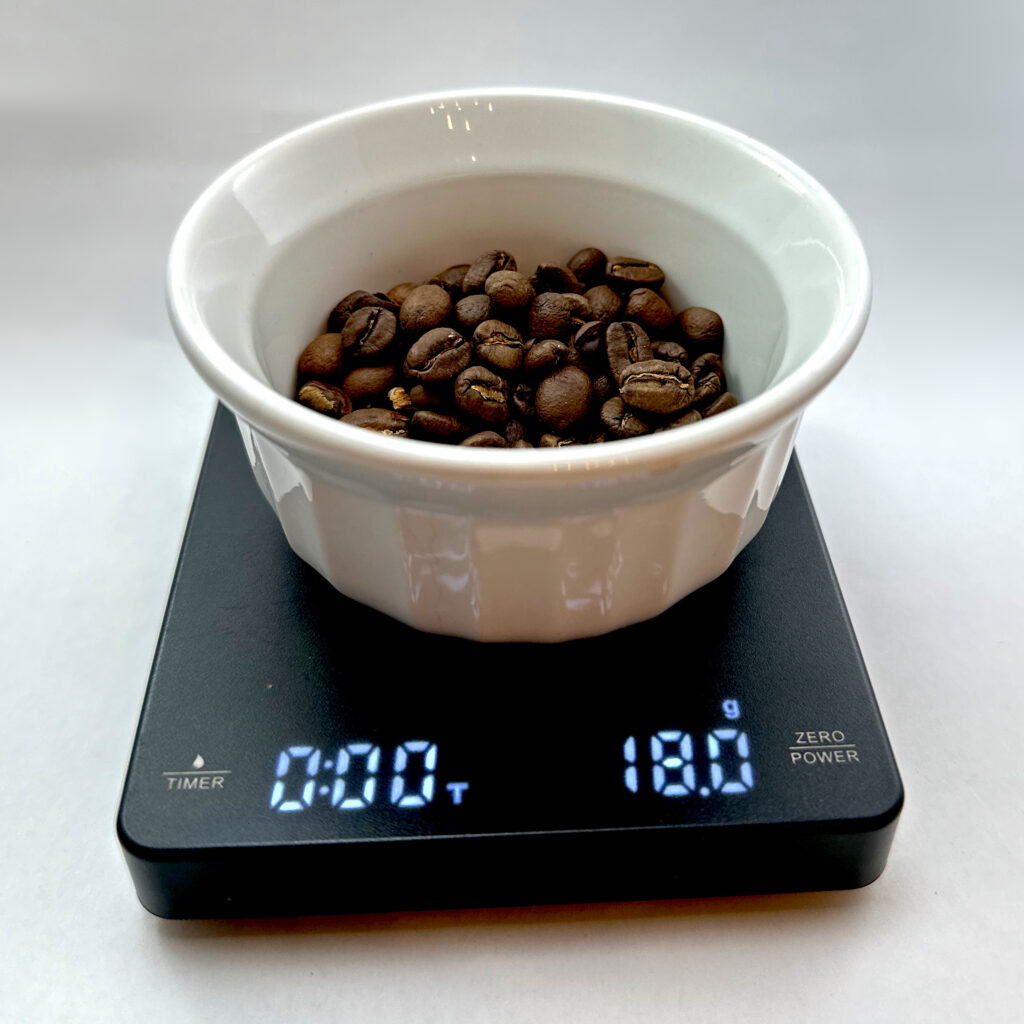
Baseline Espresso Starting Point
This is a reliable starting point for the Bambino Plus:
- Dose: 18g
- Yield: 36g (1:2 ratio)
- Time: 25–35 seconds
These numbers are guidelines, not rules. Taste matters more than time.
Adjusting by Taste
- Sour, sharp, or thin: Grind finer (under-extracted)
- Bitter, dry, or harsh: Grind coarser (over-extracted)
If your espresso tastes bad on its own, it will taste bad in a latte, just diluted. Fix the shot first. For additional information on dose, yield, and dialing in espresso, check out My Exact Bambino Plus Workflow.
Step 2: Choose the Right Milk
Milk choice affects both flavor and ease of steaming.
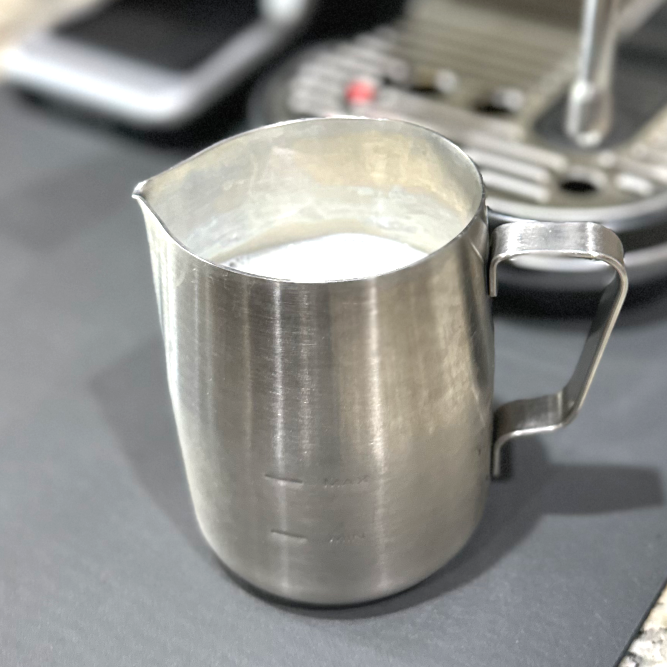
Best Milk Options for Beginners
- Whole milk (recommended)
- Most forgiving
- Naturally sweeter
- Creamier texture
- 2% milk
- Slightly less creamy
- Still easy to steam
- Oat milk (barista blends)
- Can texture well
- Requires tighter timing
- Flavor varies by brand
If you’re learning, whole milk will be the most forgiving and easiest to learn with.
Step 3: Steam Milk Properly
The Bambino Plus offers auto steam and manual steam. Both can produce excellent milk. The difference is consistency versus control.
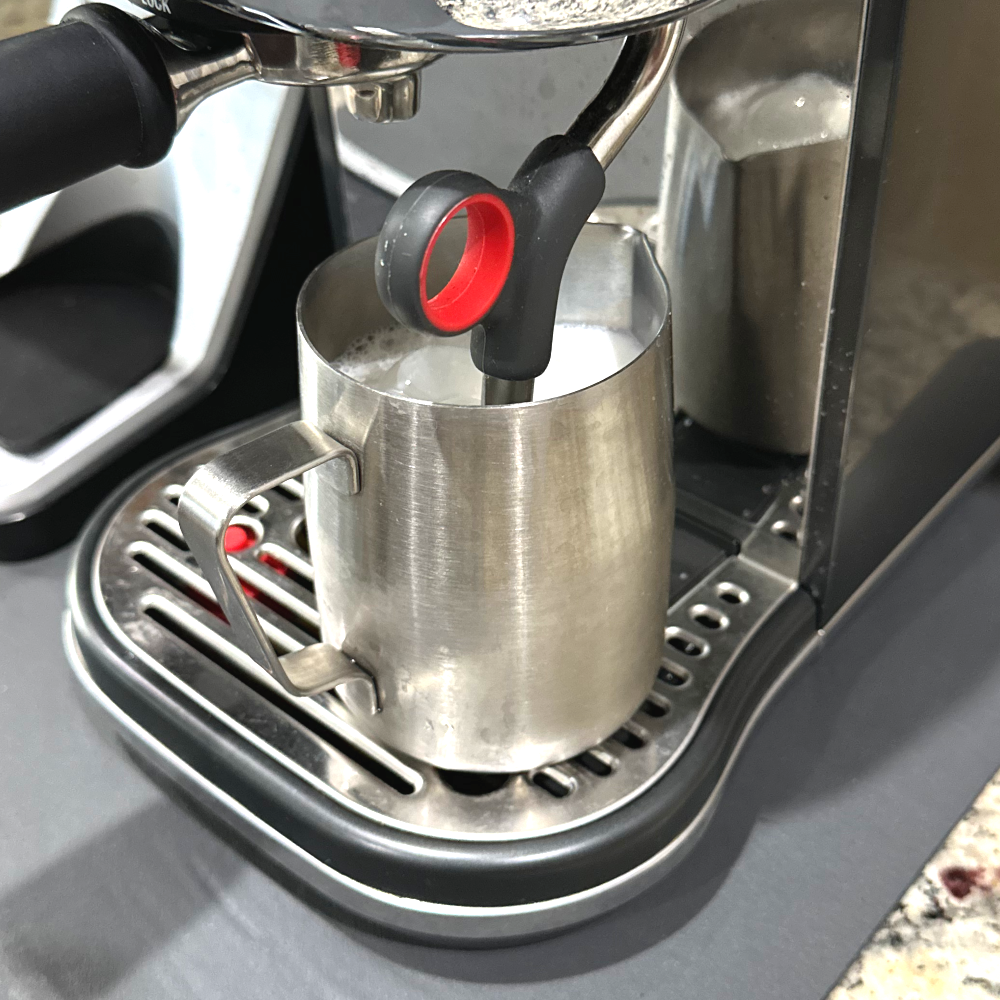
Option A: Auto Steam (Most Consistent)
Auto steam is ideal for speed and repeatability.
How to Use Auto Steam
- Fill the milk pitcher just below the spout
- Purge the steam wand briefly
- Insert the wand tip just below the milk surface
- Select your desired foam level
- Let the machine finish automatically
If the milk feels too airy, lower the foam setting.
Option B: Manual Steam (More Control)
Manual steaming uses a two-phase method.
Phase 1: Stretch (3–5 Seconds)
- Wand tip just below the surface
- Gentle paper-tearing sound
- Introduce a small amount of air
This determines how much foam you’ll have.
Phase 2: Texture
- Submerge the wand slightly deeper
- Create a rolling vortex
- Heat until the pitcher is just too hot to comfortably hold
The goal is glossy, paint-like milk, not stiff foam or bubbles. For additional information on mastering steaming, check out our Bambino Plus Steaming Tips Guide.
Step 4: Combine Espresso and Milk Correctly
Once you have balanced espresso and properly textured milk, it’s time to combine them.
Standard Latte Ratio
- 1 double espresso: ~36g liquid
- 6–8 oz steamed milk
- Thin layer of integrated microfoam
A latte should not have thick foam sitting on top. The texture should be smooth and unified.
Pouring Technique (Even If You Don’t Care About Latte Art)
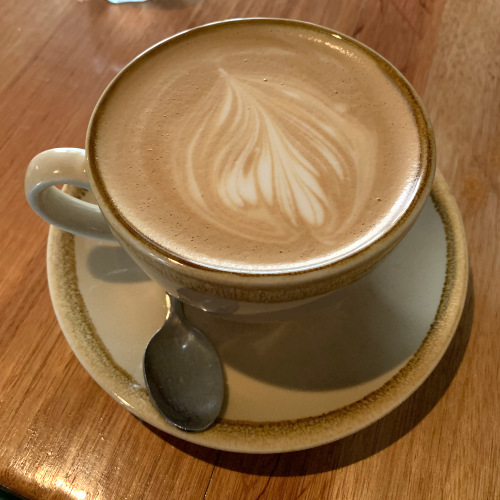
Pouring affects texture even if you’re not making art.
- Swirl milk in the pitcher immediately
- Tap gently to remove surface bubbles
- Start pouring from slightly higher
- Lower the pitcher near the end to integrate foam
If milk separates in the cup, it was likely over-aerated, under-textured, or left sitting too long. Pour immediately after steaming.
Common Latte Mistakes on the Bambino Plus
Fixing Bad Espresso with Milk
If your latte tastes:
- Sour: Espresso was under-extracted
- Bitter/burnt: Espresso was over-extracted
Milk softens flaws but does not eliminate them. If you need help troubleshooting why your espresso is not coming out quite right, check out our Troubleshooting Guide.
Overheating the Milk
Milk heated above ~160°F:
- Loses sweetness
- Tastes flat
- Becomes thin
If it smells cooked, it’s too hot.
Adding Too Much Foam
A latte is not a cappuccino. Too much air makes the drink feel dry and unbalanced. Stretch briefly, then texture.
How to Make Your Latte Taste Sweeter (Without Syrup)
If your latte tastes flat:
- Lower milk temperature slightly
- Ensure espresso is balanced
- Use fresher beans
- Avoid over-extraction
Properly heated milk tastes sweeter due to lactose breakdown. Sweetness comes from technique, not sugar.
Workflow for Busy Mornings
Once dialed in, lattes on the Bambino Plus are fast.
Simple Latte Workflow
- Turn on the machine and run a blank shot to properly warm up the portafilter and grouphead.
- Do this into your drinking vessel of choice to also warm up (dump and dry water before making your latte)
- Grind and prep dose for a double shot (recommend 2:1 ratio)
- Pull the shot and add to your pre-warmed mug/cup
- Steam milk immediately
- Pour and enjoy
Total time: 3–4 minutes
Can the Bambino Plus Match Café Lattes?
For home use, yes.
What the Bambino Plus Does Well
- Stable extraction
- Pre-infusion
- Consistent steam pressure
- Reliable auto milk control
What It Doesn’t Do
- Advanced pressure profiling
- Commercial steam power
- High-volume output: Cannot pull shot of espresso and steam milk at the same time
For one or two drinks at a time, technique matters more than hardware.
Latte Upgrade Checklist
If you want better results:
- Upgrade the stock tamper
- Use a precise scale
- Make small grind adjustments
- Practice milk texture daily
- Dial espresso before steaming
Good workflow creates good drinks. There are alot of tools, gadgets, and accessories that are availible and advertised to home espresso enthusiasts. Check out our recommendations on what accessories are a must and which ones you can skip.
Final Thoughts
Making a great latte on the Breville Bambino Plus isn’t complicated, it’s consistent.
- Dial in espresso
- Texture milk properly
- Combine immediately
- Adjust one variable at a time
Once those fundamentals are locked in, café-quality lattes become repeatable.
Frequently Asked Questions
What is the ideal latte ratio for the Bambino Plus?
A double shot (~36g liquid) with 6–8 oz of steamed milk produces a balanced latte.
Is auto steam good enough?
Yes. Auto steam is consistent and ideal for beginners. Manual mode offers refinement but isn’t required.
Why does my latte taste weak?
Your yield may be too high, or you’re using too much milk. Tighten the ratio and confirm balanced extraction.
Why does my milk separate in the cup?
It was over-foamed, under-textured, or sat too long before pouring.
Can I make cappuccinos with the Bambino Plus?
Yes. Increase foam slightly and reduce milk volume for a traditional cappuccino profile.